Historical restoration requires precision, care, and specialized cleaning techniques to preserve fragile materials while removing decades or even centuries of contamination. From historic buildings and monuments to vintage structures and artifacts, restoration professionals must balance surface protection, environmental safety, and efficiency to maintain structural integrity and historical authenticity.
Dry ice blasting has become one of the most trusted cleaning methods in historical restoration because it removes contaminants without damaging delicate surfaces or leaving harmful residues. Unlike sandblasting, chemical cleaning, or pressure washing, dry ice blasting uses solid carbon dioxide (CO₂) pellets that sublimate on impact, gently lifting dirt, paint, soot, mold, and pollution from surfaces without abrasion or moisture.
This guide explores how dry ice blasting works in historical restoration, its key benefits, applications, and why preservation specialists increasingly rely on this technology to protect historic structures and monuments.
What Is Dry Ice Blasting?
Dry ice blasting is a non-abrasive industrial cleaning process that uses compressed air to accelerate dry ice pellets at high speed, removing contaminants through thermal shock, kinetic impact, and sublimation.
When dry ice pellets strike a surface:
- The extreme cold causes contaminants to contract and loosen.
- The pellet impact breaks contamination away.
- The dry ice sublimates into gas, lifting debris without residue.
This process allows restoration teams to clean fragile materials safely while preserving their original structure and appearance.
Why Dry Ice Blasting Is Ideal for Historical Restoration
Preserving historical structures requires cleaning methods that do not alter or damage original materials. Traditional methods like sandblasting or chemical cleaning can erode stone, weaken wood, or leave harmful residues.
Dry ice blasting provides a safer and more precise alternative.
1. Non-Abrasive Cleaning Protects Historic Surfaces
Historical monuments and buildings often include fragile materials such as:
- Limestone
- Brick
- Stone
- Wood
- Metal
- Marble
- Plaster
Dry ice blasting is soft and non-abrasive, allowing contaminants like paint, pollution, soot, and mold to be removed without damaging delicate surfaces or changing their structure.
This is critical in preservation projects where even minor surface damage can permanently alter historical materials.
2. No Water or Chemicals
Many historic structures are vulnerable to moisture and chemical exposure.
Water-based cleaning methods can cause:
- Mold growth
- Material weakening
- Structural deterioration
- Staining or corrosion
Chemical solvents can:
- Discolor stone
- Damage coatings
- Leave residue
- Require extensive cleanup
Dry ice blasting eliminates these risks by using a completely dry and chemical-free cleaning process, reducing environmental impact and preserving structural integrity.
3. Safe for Monuments and Artifacts
Historical restoration often involves:
- Sculptures
- Monuments
- Architectural details
- Decorative stonework
- Metal fixtures
- Wooden beams
- Heritage artifacts
Dry ice blasting can clean intricate and delicate areas because it:
- Reaches tight crevices
- Removes deep contamination
- Leaves surfaces dry and intact
- Requires minimal mechanical contact
This allows restoration teams to preserve fine details while achieving thorough cleaning.
Common Historical Restoration Applications
Historic Building Restoration
Dry ice blasting is widely used to restore:
- Brick buildings
- Stone facades
- Wooden structures
- Industrial heritage sites
- Historic homes
- Churches and government buildings
It removes:
- Pollution buildup
- Graffiti
- Mold and mildew
- Soot and smoke damage
- Old paint and coatings
This helps return buildings to their original appearance without structural damage.
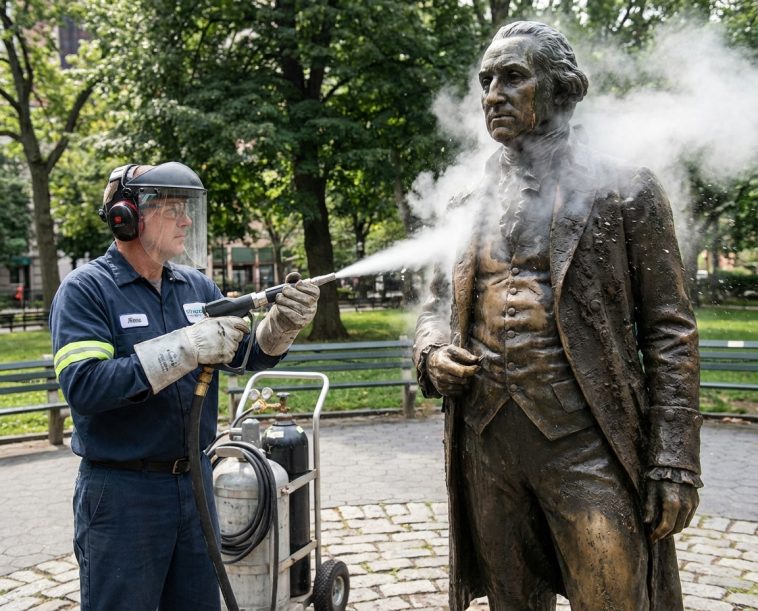
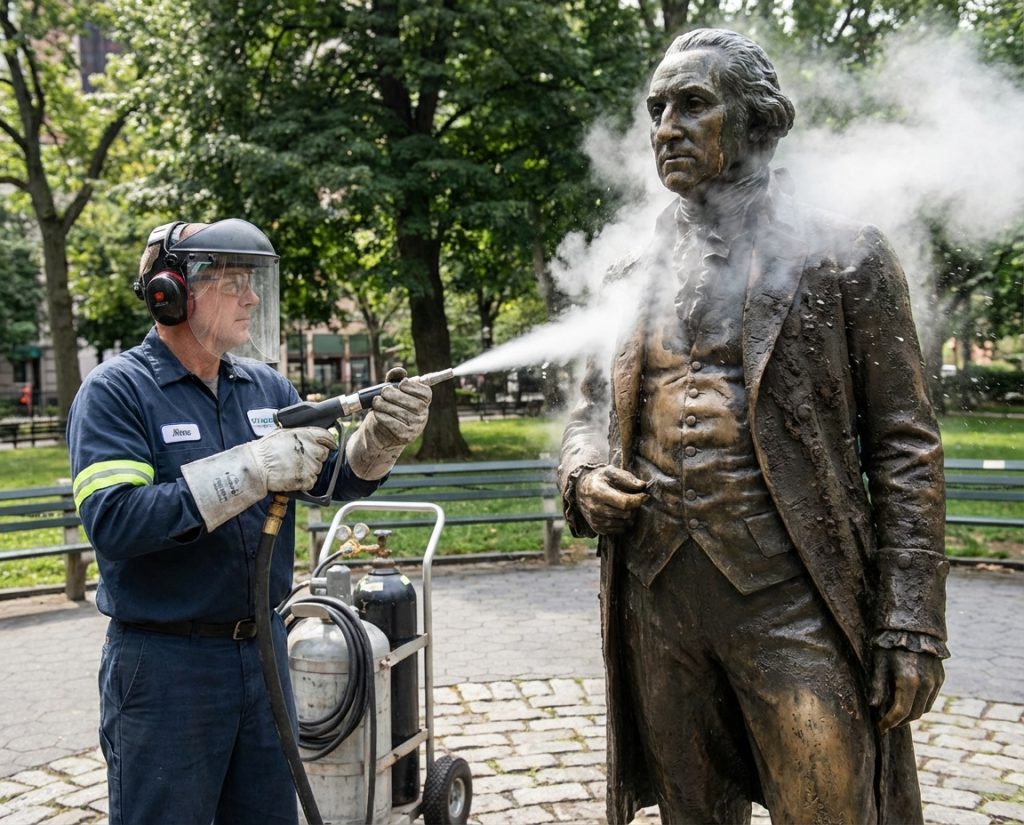
Monument and Statue Cleaning
Dry ice blasting safely restores:
- War memorials
- Public monuments
- Statues
- Sculptures
- Stone carvings
It gently removes environmental damage while preserving historical craftsmanship and fine detail.
This makes it ideal for preservation projects that require careful material protection.
Fire and Smoke Damage Restoration
Historic structures often suffer from fire damage.
Dry ice blasting removes:
- Smoke residue
- Char
- Soot
- Carbon buildup
without introducing water that could further damage the structure.
This speeds up restoration and protects sensitive materials.
Wood Beam and Interior Restoration
Dry ice blasting is highly effective for:
- Old wood beams
- Interior walls
- Ceilings
- Structural supports
It removes:
- Paint
- Mold
- Dirt
- Smoke damage
- Biological growth
while preserving the natural wood grain and structure.
Environmental Benefits of Dry Ice Blasting
Eco-Friendly Cleaning Method
Dry ice blasting is considered environmentally responsible because:
- Dry ice is made from recycled CO₂
- No chemical waste is produced
- No secondary blasting media is left behind
- Minimal environmental impact
This makes it a sustainable solution for historical preservation and restoration projects.
Reduced Waste and Cleanup
Traditional methods create:
- Sand waste
- Chemical runoff
- Water contamination
- Cleanup labor
Dry ice blasting produces only the removed contaminants, significantly reducing waste and cleanup time.
This improves project efficiency and lowers restoration costs.
Dry Ice Blasting vs Traditional Historical Restoration Methods
| Cleaning Method | Surface Damage Risk | Moisture | Residue | Environmental Impact | Precision |
| Sandblasting | High | No | Yes | Moderate | Low |
| Chemical Cleaning | Moderate | No | Yes | High | Moderate |
| Pressure Washing | Moderate | Yes | Yes | Moderate | Low |
| Manual Cleaning | Low | Sometimes | Yes | Moderate | Low |
| Dry Ice Blasting | Very Low | No | No | Low | High |
Dry ice blasting offers the best balance of safety, precision, and environmental responsibility for historical restoration projects.
Cost and Efficiency Advantages
Dry ice blasting provides significant operational benefits for restoration contractors and preservation teams.
Faster Project Completion
- Minimal setup
- Quick cleaning
- Less downtime
- Reduced labor
Lower Restoration Costs
- No chemical disposal
- Less surface repair
- Reduced cleanup
- Fewer materials needed
Improved Restoration Accuracy
- Gentle cleaning
- Surface preservation
- Better visual results
- Higher project quality
Dry ice blasting often results in lower total restoration costs and faster completion times compared to traditional cleaning methods.
Best Practices for Using Dry Ice Blasting in Historical Restoration
1. Conduct Material Assessment
Evaluate:
- Surface type
- Age of structure
- Contaminant type
- Structural sensitivity
This ensures proper pressure and pellet selection.
2. Use Adjustable Pressure Settings
Lower pressure protects delicate materials while still removing contaminants effectively.
3. Work with Restoration Specialists
Experienced dry ice blasting professionals understand:
- Historic preservation standards
- Surface protection techniques
- Environmental regulations
- Safe cleaning practices
4. Follow Preservation Guidelines
Always align with:
- Historic preservation regulations
- Local restoration standards
- Environmental compliance rules
This ensures safe and compliant restoration work.
The Future of Dry Ice Blasting in Historical Preservation
As restoration technology advances, dry ice blasting is becoming a preferred method for:
- Heritage preservation
- Monument cleaning
- Historic building restoration
- Cultural site maintenance
- Sustainable restoration projects
With increasing focus on environmental responsibility and surface preservation, dry ice blasting is expected to play a growing role in historical restoration worldwide.
Dry ice blasting is revolutionizing historical restoration by offering a non‑abrasive, chemical‑free cleaning method that preserves delicate surfaces while removing contaminants, pollutants, and aged finishes with precision. From architectural details to priceless artifacts, this innovative technique protects heritage materials and extends the life of restoration projects. For professionals seeking top‑tier results, nexAir’s dry ice blasting services deliver unmatched expertise, advanced equipment, and reliable support tailored to historical restoration needs. Their team understands the unique challenges of preserving historical integrity and offers solutions that emphasize both effectiveness and preservation. Discover how nexAir can elevate your next restoration project: https://www.nexair.com/dry-ice/historical-restoration/