Fort McCoy’s East Barracks Project: A Steady March Toward Economic Renewal
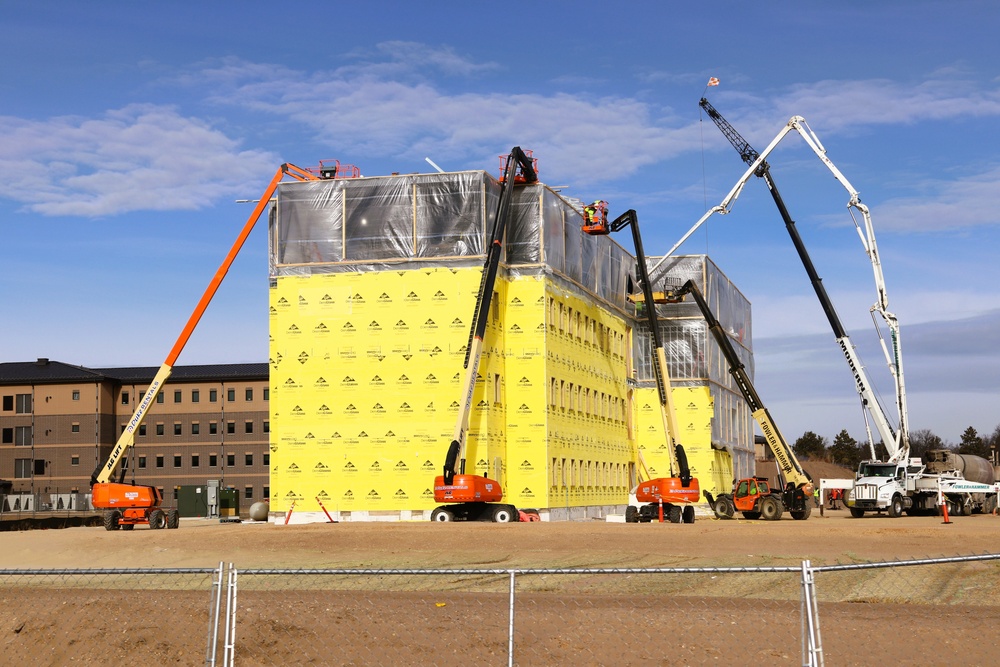
The ongoing construction of Fort McCoy’s East Barracks Project is drawing attention not only for its impressive scale—a $27.3 million transient training troops barracks—but also for the broader economic ripple effects it promises to deliver. As we take a closer look at this ambitious military construction initiative, we recognize that its progress is not solely about erecting a building for housing up to 400 service members. Rather, it is also a key driver for local economic activity, job creation, and an indicator of how military infrastructure projects can boost broader regional development.
In the world of business and construction management, staying ahead of schedule amid tricky parts and tangled issues is a significant achievement. With the project currently nearing the 70 percent completion mark, it is clear that the contractors and all involved have managed to steer through some of the more confusing bits and complicated pieces that can typically slow down such large-scale endeavors.
Project Milestones and Steady Progress: A Detailed Overview
Initiated in May 2024, the East Barracks Project has steadily progressed, with contractors from L.S. Black Constructors showing a commendable pace that even surpasses initial expectations. Awarded in February 2024 for precisely $27,287,735, this project follows a consistent history of successful work by the same contractor on previous transient training barracks and associated infrastructure like the new brigade headquarters building on the same block.
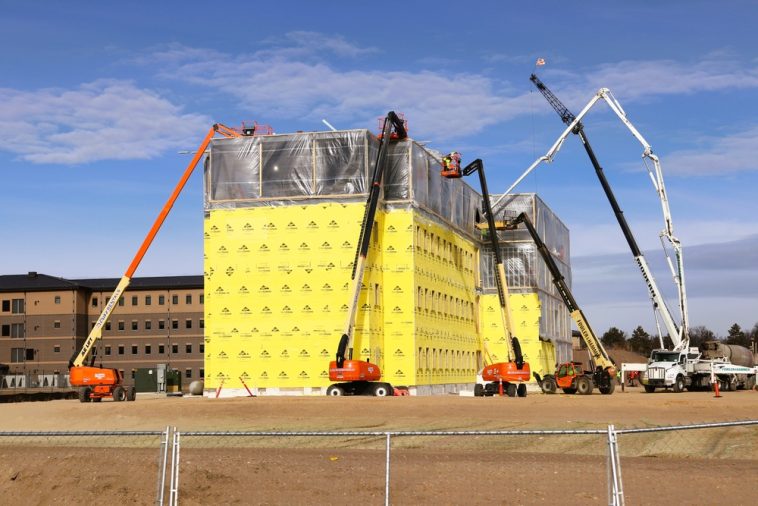
Recent updates indicate that as of September 12, 2025, the project had reached 68 percent complete. Contractors have been actively addressing multiple construction aspects, including:
- Extensive masonry work on the north and northwest sides of the building.
- Continuous installation of drywall, glazing, and ceiling grids throughout the complex.
- Ongoing installation of bathroom tile on the first floor and window fitting.
- Detailed coordination of mechanical, electrical, and plumbing rough-ins.
- Steady progress in parking lot improvements including curb, gutter, and concrete paving placement.
This operational update not only highlights tangible progress on the building itself, but also underlines a broader trend in military construction: the ability to consistently deliver results even when confronted with potentially nerve-racking scheduling delays and off-putting technical challenges.
Understanding the Construction Work: Breaking Down the Process
Building a structure of this magnitude involves getting into numerous fine points and subtle parts that require expert coordination and precision. The East Barracks Project is designed with permanent construction features such as reinforced concrete foundations, concrete floor slabs, and structural steel frames. Other critical elements include:
- Steel stud infill and masonry veneer walls to ensure durability.
- Prefinished standing seam metal roofing designed for longevity.
- Integrated heating, ventilation, and air conditioning systems that promise optimal comfort for trainees.
- Plumbing, mechanical systems, and comprehensive electrical installations that support a round-the-clock operational tempo.
In addition, supporting facilities such as concrete sidewalk paving, land clearing, utility connections, and general site improvements play a super important role in ensuring that the entire project not only meets military standards but also contributes to future operational readiness. These foundational works, which might appear as minor details, are key to mitigating the twists and turns that modern military construction often faces.
Analyzing the Basics: The Role of LS Black Constructors in Military Projects
Choosing an experienced contractor makes a world of difference for projects of this scale. LS Black Constructors, a name synonymous with quality within Fort McCoy’s history, has not only previously built two of the transient training troops barracks but also successfully completed the brigade headquarters building in the same vicinity. Their robust portfolio and familiarity with the unique demands of military installations have allowed them to figure a path through various challenges, ensuring that work continues with minimal disruptions.
In this instance, the steady pace of construction supports the narrative that detailed project management and efficient contractor execution are essential, even when working under pressures that range from intimidating to downright nerve-racking. The consistent updates and transparent tracking of the project’s progress have built a measure of confidence that deadlines will be met—even as the project navigates a labyrinth of scheduling issues and technical nuances.
Economic Impacts and Broader Benefits for the Fort McCoy Region
Beyond the construction site, this development is part of a larger picture that brings extensive economic benefits to both the installation and the surrounding community. Military construction projects, such as the East Barracks Project, contribute significantly to local economies by:
- Injecting millions of dollars in construction spending, with the Fort McCoy Plans, Analysis, and Integration Office accounting for over $310 million in new buildings and ranges since fiscal year 2019.
- Supporting operating costs that have exceeded $1.47 billion when considering utilities, maintenance, and salaries for civilian contract personnel.
- Providing employment opportunities to local workers, subcontractors, and suppliers.
- Stimulating secondary markets through increased demand for local goods, services, and logistic needs.
Such projects are not isolated initiatives but part of a larger beam of federally supported economic activity. Projects like the $27.3 million East Barracks, the $28.08 million South Barracks Project, and the $55.75 million Collective Training Officers Quarters Project not only create direct benefits in terms of military readiness but also send positive signals through local small business circles and industrial sectors, demonstrating that substantial public investment leads to a impetus for local economic births and sustained operational growth.
Dissecting the Tricky Parts: Construction Challenges and Operational Complexities
No large-scale construction project escapes challenges. At Fort McCoy, several elements of the project have required diligent oversight and responsive action from all parties involved. For instance, the installation of mechanical, electrical, and plumbing (MEP) systems—an area full of problems and subtle details—illustrates just how much fine-tuning is necessary to ensure that the finished product functions as required by both military and operational standards.
Some of the tricky parts that must be managed include:
- The coordination between multiple construction teams working on concurrent tasks, from masonry to drywall finishing.
- Addressing the continual demands of reinforced concrete work and structural steel installation, ensuring that these twisty tasks are completed without compromising safety standards.
- Integrating a broad range of systems—from HVAC to electrical wiring—in a way that respects both the timeline and the necessity for precision.
Each element, while small on its own, comes together to form a comprehensive system that supports the day-to-day operations of a bustling military facility. In many ways, understanding these finer details helps illuminate how projects like this are not only built physically but also through a landscape of managing your way through steady progress updates and real-world challenges.
Examining the Timeline: Scheduled Completion and Future Outlook
The timeline for the East Barracks Project is another topic that offers rich insights into the nature of military construction. According to available Army Corps of Engineering documents, the project is set to be completed within 780 calendar days, with an expected finish date of April 24, 2026. This timeline has been carefully constructed to ensure that every nitty-gritty detail is attended to, reducing the risk of overruns while maintaining a level of quality that is indispensable for military usage.
The progress update from September 12, 2025, underscores that the project is slightly ahead of the planned schedule—a positive sign for project managers, local stakeholders, and military leadership alike. It also reinforces the notion that working through tangled issues with a mix of transparent communication, diligent oversight, and technical expertise can yield success even in environments that are full of problems.
This on-time progress is especially crucial given the intensive nature of the building: permanent construction features like reinforced concrete foundations demand serious engineering input and constant vigilance against potential delays—an effort that LS Black Constructors seems to have successfully integrated into their operational model.
Construction Industry Lessons: What Local Business Owners Can Learn
The lessons learned from Fort McCoy’s barracks projects extend well beyond the confines of military construction. Local small business owners and industrial operators can take note of several key aspects that have broader applicability:
- Project Management Essentials: Staying ahead of schedule despite intimidating technical requirements is a testament to effective planning and execution. Business owners in any sector can benefit from adopting similar strategies, such as regular progress updates and agile problem-solving methods.
- Collaboration with Experienced Contractors: The track record of LS Black Constructors in Fort McCoy’s history highlights the value of partnering with qualified and reputable firms. This principle applies in every business scenario, from industrial manufacturing projects to automotive assembly lines.
- Economic Multiplier Effect: Investment in major construction and infrastructure projects stimulates related sectors. This means that local suppliers, service providers, and even marketing agencies can experience a boost in demand—turning a single project into a broader catalyst for regional economic growth.
The advancements at Fort McCoy illustrate a dynamic approach where public investment dovetails with private enterprise, allowing local economies to benefit from large-scale military projects while fostering an ecosystem in which small business and industrial activity can thrive.
Detailed Project Specifications: A Feature Table
For those who are keen on getting into the detailed aspects of the project, here is a table summarizing key features of the East Barracks Project:
| Feature | Description |
|---|---|
| Contract Amount | $27,287,735 |
| Building Size | Over 60,000 square feet |
| Capacity | Up to 400 service members |
| Main Structural Elements | Reinforced concrete foundations, concrete floor slabs, structural steel frames |
| Systems Included | Heating, ventilation, air conditioning (HVAC), plumbing, electrical, mechanical systems |
| Project Duration | 780 calendar days (Completion projected for April 24, 2026) |
This table elucidates the project’s key parameters, offering even those less familiar with construction speak a clear view of what is at stake. It also demonstrates how systematic planning, coupled with a detailed understanding of both the broad strokes and the subtle details, is fundamental when steering through projects with many layers of complexity.
Economic Ripple Effects: Business and Community Advantages
Large-scale projects such as the East Barracks not only serve the military’s operational needs but also generate several beneficial side effects that help local communities prosper. Let’s take a closer look at what this means for the region:
- Job Creation: With hundreds of workers involved in the construction phase, local job opportunities are significantly boosted. This can lead to higher consumer spending and increased economic activity in nearby towns.
- Local Business Engagement: Major contracts like this often require sourcing materials, supplies, and services from local vendors, giving a substantial lift to small businesses around Fort McCoy.
- Infrastructure Improvements: Ancillary projects such as paving, utility connection enhancements, and general site improvements help to modernize the local infrastructure, benefiting both military personnel and civilian residents alike.
- Long-Term Economic Stability: Investments in military infrastructure are long-lasting. Once completed, the barracks and other supporting facilities contribute to the operational capabilities of the installation, which in turn supports consistent federal and local spending in the years to come.
In fact, the Fort McCoy installation has seen more than $310 million in new construction across various projects since fiscal year 2019, alongside more than $1.47 billion in operating costs dedicated to maintenance, improvements, and contractual services. Such investment underscores a broader trend: well-structured public projects can serve as a stabilizing force in local and regional economies, providing a foundation upon which communities and businesses can build sustainable growth.
Preparing for Future Projects: Lessons in Efficiency and Collaboration
Looking ahead, the ongoing efforts to complete the East Barracks Project serve as a notable case study in effective collaboration between the military, construction sectors, and local businesses. Future projects, such as the $55.75 million Collective Training Officers Quarters Project, are already in the pipeline, promising to further transform large parts of Fort McCoy’s cantonment area.
This coordinated approach, which involves:
- Thorough planning and regular progress evaluations,
- The ability to manage your way through the inherent twists and turns of military construction, and
- The strategic use of experienced contractors who can handle both the fine points and the hidden complexities of large-scale projects
…is a blueprint that could be beneficial not only within the context of military infrastructure but also for public-private partnerships and broader commercial construction sectors. By taking a closer look at these projects, businesses and industrial operators can gain insights into effective project management, resource allocation, and efficient operational strategies that are applicable across diverse industries.
Addressing the Intimidating Technical and Operational Considerations
There is no denying that the technical and operational requirements of constructing a building like this are filled with challenging and sometimes intimidating twists and turns. Yet, when well managed, these nerve-racking elements transform into valuable lessons that drive success in both military and civilian projects alike.
Some of the most challenging, yet critical, technical aspects include:
- Integrating Multiple Disciplines: Successfully merging disciplines such as masonry, electrical, plumbing, and HVAC requires constant coordination across teams. This is a lesson in getting around multifaceted challenges and ensuring that all work is synchronized.
- Quality Assurance Amid Tight Deadlines: Maintaining a high-quality standard while working under compressed deadlines stresses the importance of continuous oversight and the role of rapid, yet careful, project evaluations.
- Adaptive Problem Solving: Beyond the daily tasks of construction, unforeseen challenges such as supply chain delays or unforeseen groundwork conditions demand that teams remain adaptable. Learning to figure a path through these conditions is an art that benefits all levels of management.
For business leaders and project managers outside the construction realm, these lessons on overcoming intimidating challenges are instructive. By applying adaptive problem solving and focusing on small distinctions in their operational processes, companies of all sizes can improve overall efficiency and responsiveness to market changes.
Comparing Military Construction to Civilian Industrial Projects
It’s interesting to analyze how military construction projects, such as the East Barracks, align with trends seen in industrial manufacturing or even automotive development. While the industries may differ in their end products, there are several overlapping themes, including the management of complicated pieces of the production process and the need to coordinate multiple moving parts simultaneously.
In both scenarios, certain principles remain critical to success:
- Systematic Planning: Whether constructing a facility or assembling a car, designing a timeline and following strict quality control processes are key.
- Supply Chain Coordination: Just as military construction projects rely on timely delivery of materials and equipment, automotive and manufacturing sectors depend on a well-managed supply chain.
- Technological Integration: The inclusion of advanced systems—such as state-of-the-art HVAC solutions in military barracks or cutting-edge robotics in automotive manufacturing—underscores the importance of staying current with technological advancements.
These comparisons reveal that while the specifics of the projects differ, the overarching challenges—like managing your way through tight schedules and subtle technical details—are remarkably similar. This cross-industry perspective can help local entrepreneurs and business strategists adopt best practices from diverse fields, thereby fostering more robust, flexible, and efficient operations.
Local Community Engagement: Building More Than Just Infrastructure
Far beyond blueprints and concrete slabs, military construction projects significantly influence local communities. The East Barracks Project is a prime example of how such initiatives contribute to the broader social and economic landscape in a manner that is both practical and encouraging.
Community benefits include:
- Enhanced Local Workforce Skills: As projects ramp up, local tradespeople and technical workers gain hands-on experience with sophisticated construction practices that can translate into broader job opportunities.
- Upgraded Infrastructure: The physical improvements often extend to public roads, utilities, and other community facilities, enhancing overall living standards.
- Fostering Public-Private Partnerships: Large-scale projects encourage collaboration between local businesses and government agencies, paving the way for more innovative economic development strategies.
- Increased Community Pride: A visible, modern construction project on a local base reinforces civic pride, showcasing the area as a hub of progress and concrete achievements.
These aspects, though sometimes considered peripheral, are integral to understanding the full impact of military investments. They remind us that while the building itself is physically impressive, its true value lies in the ripple effects that benefit everyday lives in local communities.
Staying Ahead in a Competitive Economic Landscape
From the perspective of business owners and industrial leaders, the success of projects like Fort McCoy’s East Barracks sends a clear message: highly complex construction initiatives, when managed effectively, pave the way for significant economic rewards. This project demonstrates that structured public investments can help catalyze regional growth. By aligning military contracts with efficient project management, communities not only achieve improved operational capabilities but also create an environment ripe for small business ventures and industrial expansion.
Specifically, areas that can capitalize on this momentum include:
- Real Estate Development: With an influx of military and civilian personnel, there will likely be growing demand for housing and commercial spaces.
- Local Manufacturing and Industrial Services: Supply chains related to construction materials, machinery, and ancillary services may see increased business, driving local manufacturing growth.
- Service Industries: As personnel shift into temporary and long-term roles at Fort McCoy, there will be rising demand in sectors such as retail, dining, and healthcare.
This alignment of public infrastructure and private enterprise is a testament to the strategic value of investing in large-scale projects. It also underscores that even in sectors riddled with tension and off-putting technical demands, the rewards are often worth the challenges.
Future Directions: Embracing Change and Learning from Experience
Looking toward the future, the success of the East Barracks Project is not just a story about concrete, steel, and financial figures—it is also about a forward-thinking strategy that bridges military, industrial, and economic development. As additional construction projects at Fort McCoy come online, including the upcoming Collective Training Officers Quarters initiative, stakeholders at every level are learning to take a closer look at how these projects are planned, executed, and leveraged for long-term gain.
Key future directions include:
- Enhanced Collaboration: Strengthening the ties between military branches, local businesses, and community leaders to ensure projects serve both operational and economic needs.
- Investment in Technical Training: Using the momentum from current projects to offer enhanced technical training programs for local tradespeople, thereby ensuring a steady pipeline of skilled workers.
- Sustainability Focus: Embracing modern construction technologies and sustainable building practices that not only meet military standards but also set new benchmarks for eco-friendly construction within industrial sectors.
- Scalability of Projects: Employing scalable project management strategies that can be adapted to different types or sizes of projects, ensuring efficiencies are carried over from one initiative to the next.
These forward-thinking plans emphasize that learning to get into the nitty-gritty and working through subtle challenges is essential for success. The skills developed during this project—from managing schedules to balancing complex systems—are transferable and will undoubtedly shape how future projects are executed, both within military operations and in the broader realm of industrial and small business sectors.
Conclusion: The Broader Vision Behind Fort McCoy’s Transformation
The East Barracks Project at Fort McCoy stands as a powerful reminder of how seemingly isolated construction endeavors can have far-reaching impacts on economic development, workforce enhancement, and local community transformation. Throughout its construction, the project has navigated through confusing bits, complex twists, and intimidating technical challenges, yet it moves forward with determination and thoughtful progress.
Its timely advancement is a case study in effective project management, detailing how partnerships with experienced contractors and a commitment to quality can overcome even the most tangled issues. LS Black Constructors’ role in this series of projects underscores the value of consistency and reliability when managing projects that are loaded with problems and bristling with challenges.
Moreover, the consistent injection of federal dollars into local infrastructure does more than just bolster military readiness—it fuels local economies and encourages small business growth. With hundreds of millions of dollars in construction and operating expenses already impacting the region, Fort McCoy’s projects represent a blueprint for how public investment can segue into widespread economic benefits.
As local leaders and business experts continue to take a closer look at these initiatives, it becomes clear that the transformation at Fort McCoy is not an isolated military event; it is a microcosm of a larger economic paradigm. This transformation, built on the careful management of subtle details, the swift resolution of tricky parts, and enduring collaborations, stands as a beacon of progress for communities across the nation.
In a rapidly evolving economic landscape, where every twist and turn counts, the East Barracks Project is a must-have example of how focused investments in infrastructure can yield rewards that extend well beyond the construction site. It is a testament to the fact that even in areas that may seem laden with tension and intimidating challenges, the collective efforts of skilled professionals can turn ambitious plans into reality.
Ultimately, the successful execution of projects like this offers critical insights for anyone involved in military procurement, industrial construction, or regional economic planning. It reminds us all that careful planning, collaboration, and the willingness to get into the hidden complexities are key to sculpting not only physical structures but vibrant, resilient communities ready to face the future with confidence.
As we watch Fort McCoy continue its transformation, one thing is clear: the progress made here is more than just the construction of a building. It marks a turning point where innovative project management meets economic development—a model that local business communities, industrial operators, and public policy experts would do well to emulate as we steer through the challenges of today and tomorrow.
Originally Post From https://www.dvidshub.net/news/549319/fort-mccoys-east-barracks-project-nearly-70-percent-complete-work-slightly-ahead-schedule
Read more about this topic at
Fort McCoy’s East Barracks Project nearly 70 percent …
Marine Corps Faces Initial Hurdles in Long-Term Vision to …